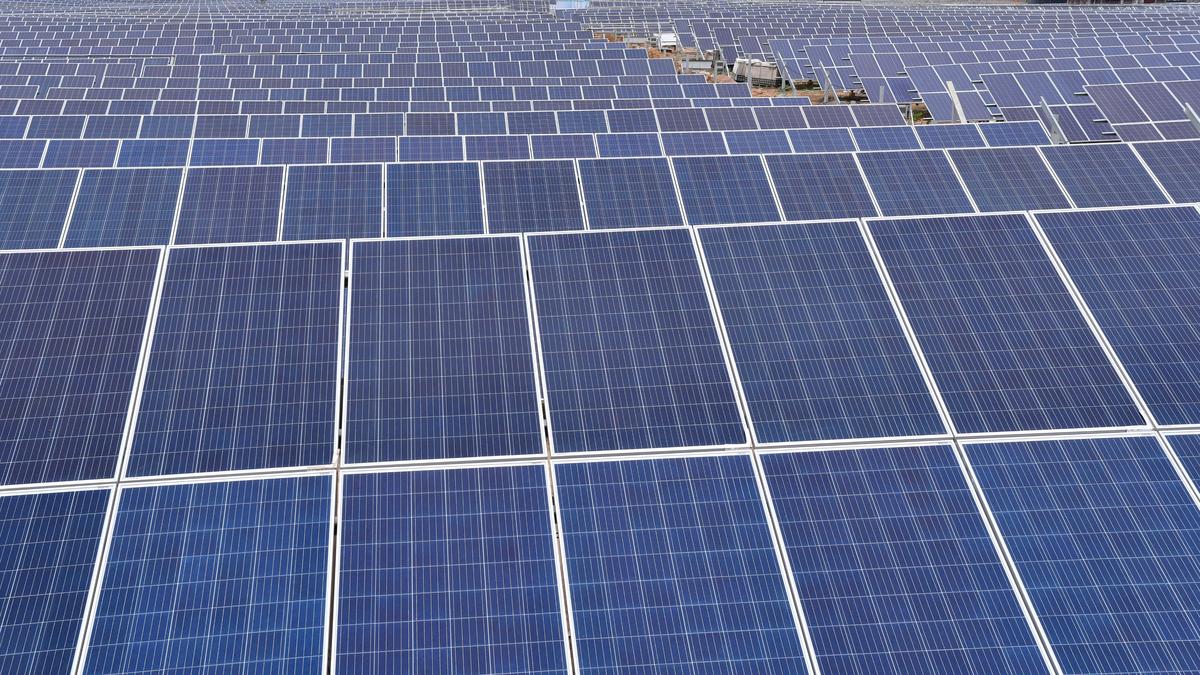
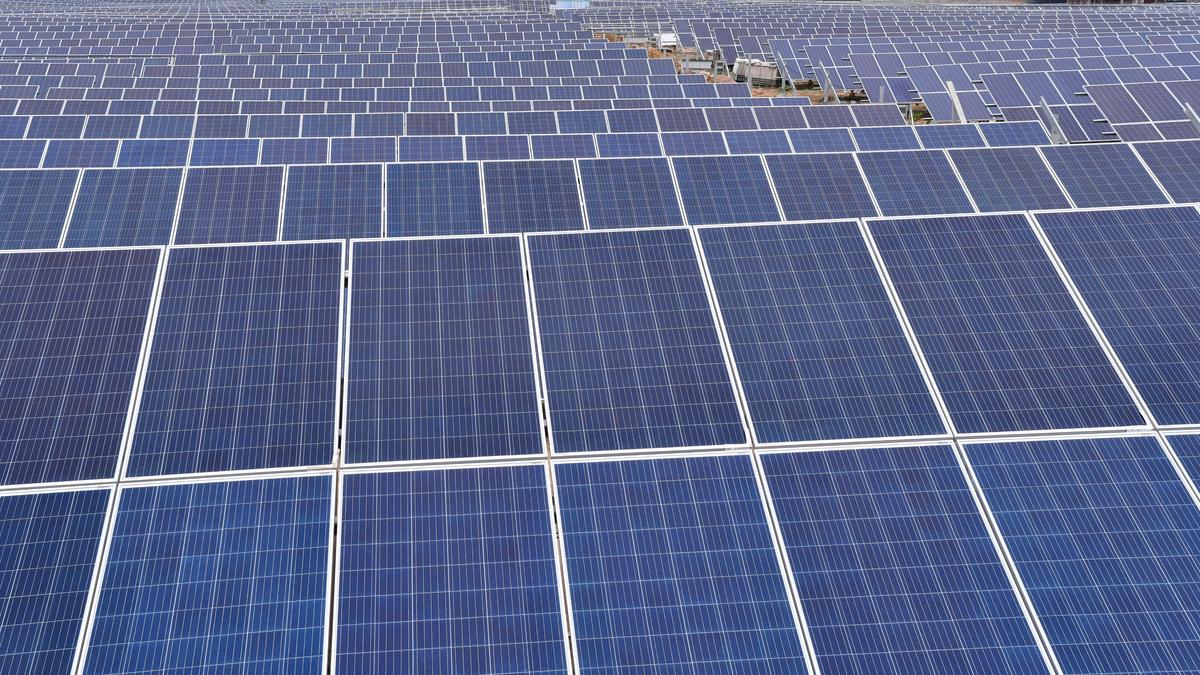
The study presents experimental methods to measure and correct the efficiency of silicon solar cells submerged in water up to 20 cm deep under simulated sunlight conditions.
| Photo Credit: RAO GN
Researchers at the BITS Pilani, Hyderabad campus, have claimed to have achieved a breakthrough in renewable energy and underwater photovoltaic applications by developing a comprehensive methodology to accurately calibrate the performance of silicon solar cells in submerged conditions.
The team, led by professors Kannan Ramaswamy and Sanket Goel along with researchers Nilofar Naaz and Shubhrajit Dutta, says that the work lays a foundation for optimizing solar-powered underwater systems like autonomous vehicles, marine sensors and underwater communication devices.
The study presents experimental methods to measure and correct the efficiency of silicon solar cells submerged in water up to 20 cm deep under simulated sunlight conditions. Using both Xenon and LED-based AM 1.5G solar simulators, the team proposed three new equations to more precisely evaluate the underwater efficiency by accounting for light source characteristics, water-induced absorption and scattering losses.
Instead of natural sunlight, the team measured the data of correct efficacy of solar cells and panels in underwater conditions using lamps to calculate the illuminance on the cell’s surface with a pyranometer and measure photovoltaic parameters. “Our work addresses the gap in accurately assessing photovoltaic performance underwater using laboratory solar simulators,” said principal investigator Professor Ramaswamy.
The research findings show that without applying these correction protocols, underwater solar cell efficiencies can be overestimated by 60% at a depth of 20 cm. By introducing correction factors, the team had demonstrated a realistic reduction in efficiency by 45%. “The new calibration approach is a critical step for laboratory-scale evaluation of underwater solar technologies,” said co-investigator Professor Sanket Goel.
“The ability to predict photovoltaic efficiency accurately in submerged environments is vital for designing sustainable, self-powered underwater systems,” said lead researcher Nilofar Naaz. The study also discusses the suitability of different photovoltaic materials for underwater and sets the stage for future advancements in underwater energy harvesting, marine exploration technologies and aquatic sensor networks, said the research team.
Published – May 05, 2025 09:40 pm IST








+ There are no comments
Add yours