Across India, campaigns against invasive alien species (IAS) are gathering administrative and judicial force. Authorities now identify, map, classify, and remove species deemed ecological threats.
In the last year alone, India’s English-language press has carried sustained coverage of ecological-loss studies, State eradication drives, and human-wildlife conflicts linked to such species. What was once a niche scientific concern has become a visible public issue and priority.
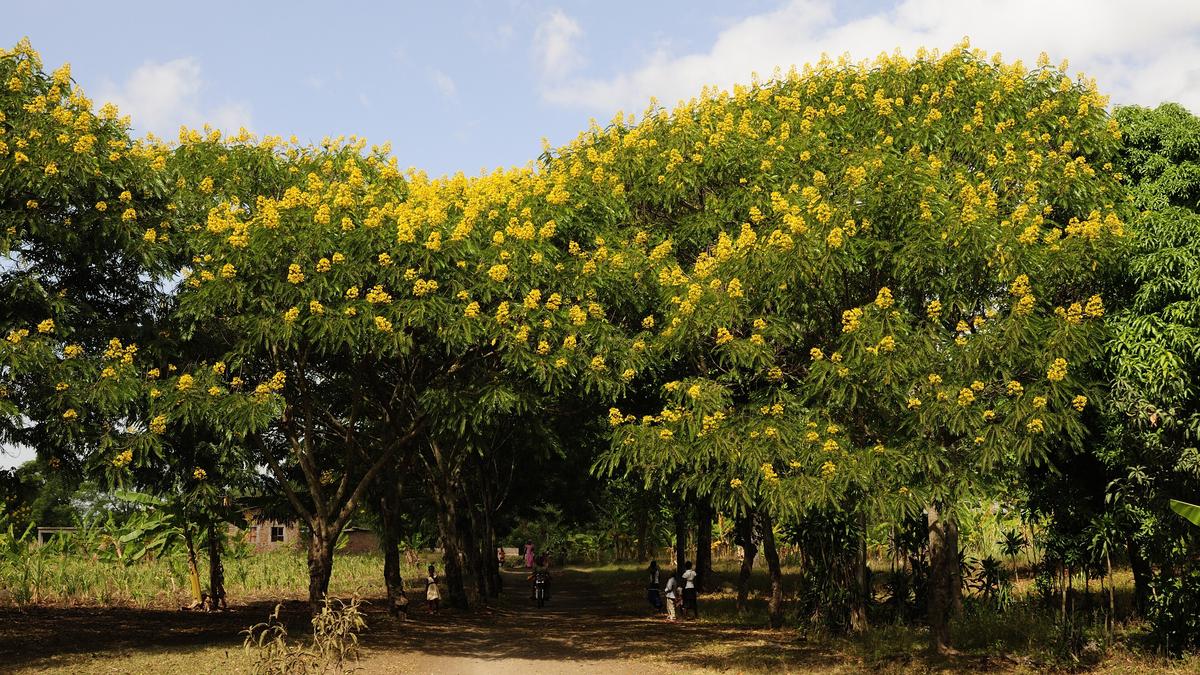
A recent Tamil Nadu court order even portrayed Prosopis juliflora shrubs as a near-Statewide threat. Government submissions have reported its clearance from 517 villages across 32 districts while the academic literature has recorded the species across the State. The plants Lantana camara and Senna spectabilis face similar campaigns elsewhere in India.
The prevailing assumption is simple: remove the invasive species and ecological recovery will follow.
Before accepting that, however, one must first ask: what condition was the landscape in before these species spread, and what conditions now sustain them?

Three patterns emerge from the evidence.
Physical changes usually came first
Throughout India, native ecological communities had already been transformed before invasive plants became dominant.
Colonial forestry, plantation expansion, and settlement removed vast tracts of forest cover. Millions of hectares were converted to tea, coffee, rubber, teak, and eucalyptus plantations. Diverse habitats gave way to simplified commercial landscapes, with lasting effects on soil biology, shade regimes, and water cycles. Logging, roads, mining, fire suppression, and chemical agriculture fragmented habitats further.
In places like Wayanad, forest edges had already degraded before species like L. camara spread into them. Biodiversity and its supporting conditions had already been decimated.
Removing a species alone can’t restore what came before. Without functioning ecological relationships, more clearing creates new vacancies, often the very conditions in which another invasive species, or the same one, can quickly return.
P. juliflora was introduced to India in 1877 as part of a misguided ecological experiment. At first seeded from the air, it spread through the guts of cattle that browsed its pods. Then came the ‘Green Revolution’ and the wider post-independent agricultural intensification. Canals expanded. Borewells multiplied. Fertiliser use surged.
As a result, waterlogging and seepage increased in some regions, depleted aquifers in others, and productivity began to decline on abandoned lands. P. juliflora is a deep-rooted phreatophyte that can exploit such altered water and soil regimes. In parts of Tamil Nadu, researchers have linked its surge to irrigation-related moisture conditions.
In other words, the plant was present for decades — what changed was the landscape around it.

Ecological disruption
Climate change, nutrient loading, land-use change, freshwater disruption, biodiversity loss, and chemical pollution are reshaping ecosystems worldwide. These are largely the effects of a globalised industrial culture pushing rapid urbanisation and infrastructure expansion.
Over three decades, India’s urban governance footprint has roughly doubled, marking a systemic expansion of fragmented, high-disturbance landscapes that extend far beyond city boundaries into peri-urban and rural ecologies.
India also supports roughly 500 million cattle and other livestock — one of the largest such populations in the world — placing continuous and heavy grazing pressure on forests and the commons. In such conditions, ‘palatable’ species are repeatedly suppressed while thorny, chemically defended, disturbance-tolerant plants such as L. camara persist or even expand.
Studies have revealed increasing woody cover across many open landscapes worldwide, partly associated with rising atmospheric carbon and other interacting factors. Fertiliser inputs remain high — India alone uses 35-40 million tonnes of urea per year — and atmospheric nitrogen deposition now adds 10-30 kg per hectare annually across many regions. Woody nitrogen-fixing species such as S. spectabilis and P. juliflora benefit from such altered conditions.
A deeper invasion
Chemical pesticides have further altered soils and microbial networks. Over time, they can disrupt genes, reduce resilience, intensify pest cycles, and weaken the ecological foundations on which productivity itself depends.
These changes were driven less by individual choice than by policies, infrastructure, and economic systems designed to maximise production at scale. The result: food production must continue yet the same hydrological, chemical, and atmospheric systems that increase output are also exhausting the land and degrading ecosystems now slated for restoration.

When multiple factors shift together, plant communities reorganise. P. juliflora growth is part of wider hydrological and chemical change across the subcontinent. Similar dynamics may apply, in differing ways, to other IAS. These plants may function as ecological first responders — species whose physiology suits rapid changes in landscape conditions.
Given time, other species follow these pioneer species. In the early stages, many may be exotic and fast-moving. Eventually, native species may also re-establish themselves. However, such ecological succession does not guarantee a return to earlier ecological states. As the underlying conditions continue to shift, new ecological assemblages are likely to emerge among the species able to thrive within them.
Life is conditional
Evolutionary and palaeoecological evidence suggests that the world’s native biomes developed under very different climatic and nutrient regimes. Grasslands expanded during drier phases of history while rainforests arose and diversified in warmer, wetter conditions. Many species can’t easily tolerate the nutrient-rich soils, altered climate or hydrologically changed landscapes of the present.
Some IAS species may also perform compensatory ecological roles. They can accumulate heavy metals, nitrogen, and carbon in biomass, provide cover for smaller wildlife in disturbed landscapes, create conditions into which other species later enter, provide windbreaks, and bind soil.
There are, of course, real consequences. Dense thickets of invasive plants can reduce accessible forage for elephants and other herbivores in forests such as the Western Ghats. But these effects unfold in landscapes already altered by logging, plantations, and nutrient enrichment.
Conservation efforts that target only the visible plant thus risk misdiagnosing the problem. It is easier to count acres of IAS removed than to measure shifts in moisture regimes or soil chemistry. Removal alone does not address the underlying drivers. Restoration requires that we read the land comprehensively, understand its history and interacting processes, and work with the ecological and human communities that remain.

What it will take
This does not mean certain species should never be removed but that restoration is difficult and requires attention to ecological processes and biodiversity. It is local, patient, and continuous. Large-scale mechanical removal brings complications of its own. While clearing vast acreages may serve a burgeoning biomass economy, there is little proof that it supports ecological recovery, which needs time.
Fears that invasive species will take over often accompany business opportunities for earthmovers and new employment schemes. A villain, it seems, can animate an economy faster than restoration can.
Communities and practitioners embedded in these habitats are often best placed to undertake careful removal where it makes ecological and cultural sense. Success, however, remains uncertain and can only be judged over years. Restoration should proceed with least harm, phased planting, intergenerational care, and meaningful human livelihoods.
Otherwise, India risks spending much of its conservation energy removing plants that are symptoms of a wider civilisational transformation that it has yet to confront.
Suprabha Seshan lives and works at the Gurukula Botanical Sanctuary in Wayanad district, Kerala.


+ There are no comments
Add yours